 how-to
How to Stop Leash Reactivity: A Step-by-Step Guide
Table of Contents
- What Leash Reactivity Actually Is (and Why It Happens)
- Threshold Management: The Foundation of Stopping Leash Reactivity
- How to Desensitise a Reactive Dog Using Counter-Conditioning
Last Updated: August 18, 2026
What Leash Reactivity Actually Is (and Why It Happens)
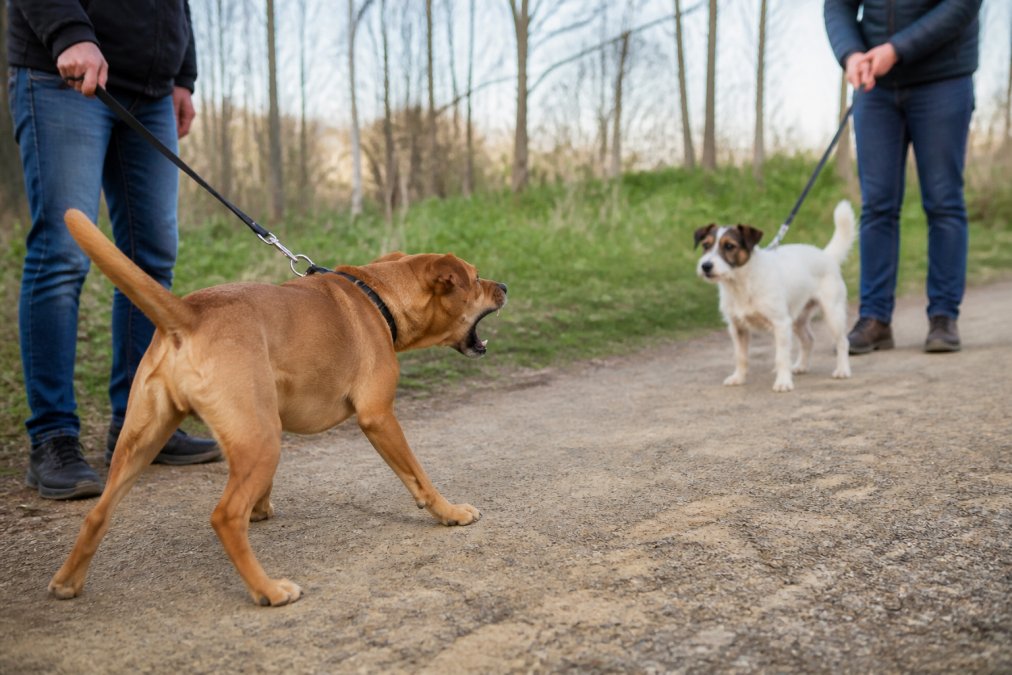
Leash reactivity is a behavioural pattern where a dog responds to a trigger, most commonly other dogs, people, or vehicles, with lunging, barking, growling, or pulling when on the lead. At Severnside K9, we see this misunderstood constantly: owners assume their dog is aggressive, when the behaviour is far more nuanced.
The lead itself changes everything. A dog that greets calmly off lead can become explosive the moment a lead is attached. That's not coincidence. It's a predictable consequence of restriction meeting arousal. The dog cannot move freely, cannot communicate through normal body language, and cannot regulate the distance between itself and the trigger. Reactivity is a communication failure, not a character flaw.
Frustrated Greeters vs Fear-Based Reactivity
A frustrated greeter is a dog that desperately wants to reach another dog. The barking and lunging are driven by excitement and frustration at being held back. These dogs often have a history of being allowed to greet every dog they see, and the lead has become an obstacle to something they expect.
Fear-based reactivity runs deeper. The dog perceives the trigger as a threat and uses barking and lunging as a pre-emptive strategy to make the scary thing go away. According to the British Veterinary Association guidance on canine behaviour, fear is one of the most common drivers of problematic behaviour in domestic dogs.
The distinction matters because the training approach differs. A frustrated greeter needs impulse control and redirection. A fear-reactive dog needs careful desensitisation and confidence-building at safe distances.
How the Lead Makes It Worse
Leash tension travels directly to the dog. When a handler grips tighter at the sight of a trigger, the dog feels that tension and interprets it as confirmation that something is wrong. Restricted movement also prevents calming signals. Dogs use body language, sniffing, looking away, and turning sideways to de-escalate. On a tight lead, these are impossible.
Threshold Management: The Foundation of Stopping Leash Reactivity
Threshold management is the single most important concept in how to stop leash reactivity, and most owners have never heard of it.
Threshold is the distance at which your dog can notice a trigger without reacting. Below threshold, your dog remains calm enough to think and respond to cues. Above threshold, the dog is in the red zone: cortisol spikes, rational thought goes offline, and no amount of treat-waving will help. Every training session must happen below threshold.
Identifying Your Dog's Triggers and Threshold Distance
Start by observing, not correcting. Walk your dog in areas where you can control distance and note exactly when the behaviour begins. Is it when another dog appears at 30 metres? 15 metres? Does it change based on whether the other dog is moving or stationary?
Common triggers include other dogs, joggers and cyclists, children running, unfamiliar men, and loud vehicles. Threshold distance is not fixed. It changes daily based on your dog's stress load. A dog that slept badly, had a vet visit, or was startled earlier in the day will have a much shorter threshold.
Trigger Stacking and Why Walks Go Wrong
Trigger stacking is the accumulation of stressors within a short timeframe. Each event raises your dog's arousal levels, and the effects compound. A dog that handled a cyclist fine on Monday might explode at the same cyclist on Tuesday, because Tuesday's walk also included a loud bin lorry, a child shouting, and an unexpected off-lead dog at close range.
This is why owners often say "he's fine most of the time, but sometimes he just snaps." The dog isn't being unpredictable. The practical fix: shorten walks on high-stress days, choose quieter routes, and give your dog genuine decompression time between exposures.
How to Desensitise a Reactive Dog Using Counter-Conditioning
Desensitisation and counter-conditioning are the evidence-based foundation of how to desensitise a reactive dog. Desensitisation gradually reduces the emotional response to a trigger, while counter-conditioning replaces a negative association with a positive one.
Step-by-step counter-conditioning process:
- Identify your dog's threshold distance for the primary trigger
- Position yourself well below that distance (add 10-20% buffer)
- Present the trigger at low intensity (e.g., another dog visible but stationary and distant)
- The moment your dog notices the trigger, deliver a high-value treat
- Remove the trigger or increase distance if the dog shows any tension
- Repeat across multiple short sessions (5-10 minutes maximum)
- Reduce distance only when your dog consistently remains calm at the current distance
The goal is to make the trigger predict good things. Over time, the emotional association shifts from threat to neutral or positive.
Building Focus and Engagement Before Triggers Appear
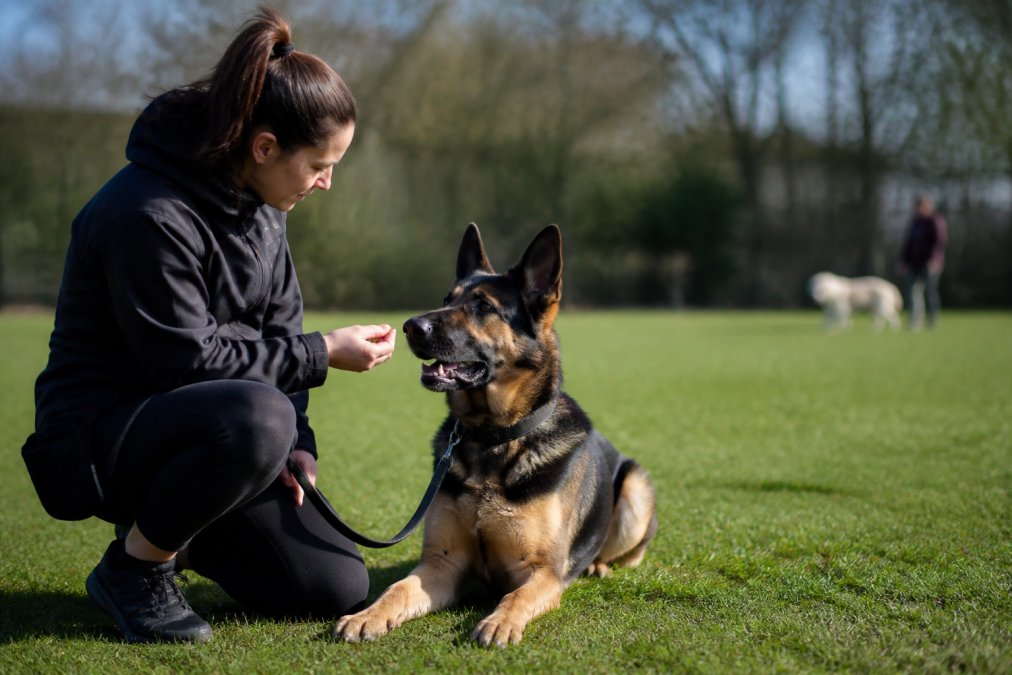
Build your dog's habit of checking in with you voluntarily throughout the walk. Practise name recognition and eye contact in low-distraction environments until it's automatic. The dog that has a strong check-in habit is far more likely to offer that behaviour when a trigger appears.
Frequently Asked Questions
Can leash reactivity be cured, or just managed?
For most dogs, leash reactivity can be significantly reduced through consistent behaviour modification — counter-conditioning and desensitisation being the most effective methods. Whether it reaches a full 'cure' depends on the dog's history, breed, and how long the behaviour has been practised. Many dogs go from lunging and barking to walking calmly past triggers. Management strategies keep the dog under threshold while training builds a genuine new response. A professional trainer can assess your dog's specific case and give a realistic prognosis.
Why does my dog become reactive only when on a lead?
The lead removes your dog's ability to use its natural flight or fight options. Off lead, a dog can increase distance from something that worries it. On lead, that option disappears, so barking and lunging become the only way to push the threat away. This is called barrier frustration in frustrated greeters, or a suppressed flight response in fear-based dogs. Leash tension from a nervous handler can also raise arousal levels, signalling to the dog that there is something worth reacting to.
How long does it take to stop leash reactivity?
There is no single timeline. A dog with mild reactivity and a consistent owner can show noticeable improvement within four to eight weeks of structured training. Dogs with years of practised reactivity, or those with fear-based aggression, typically take longer. Progress depends on how often you train, whether you manage the environment to prevent rehearsal of the reactive behaviour, and the individual dog's temperament. High-drive breeds such as German Shepherds or Malinois often respond well to structured, balanced methods once the right approach is found.
Should I let my dog greet other dogs while training for reactivity?
During active behaviour modification, most professional trainers recommend avoiding on-lead greetings altogether. On-lead greetings create an unnatural, face-to-face approach that raises arousal and can reinforce the reactive pattern. Keeping your dog below threshold and rewarding calm behaviour around other dogs is far more productive than allowing greetings that risk a negative incident. Once your dog is reliably calm at threshold distance, a qualified trainer can guide you on reintroducing controlled social contact at the appropriate stage.