 how-to
Professional Dog Training: How to Find the Right Trainer
Table of Contents
- What Professional Dog Training Actually Involves
- Dog Behaviourist vs Trainer: Which One Do You Need?
- How to Train a Reactive Dog: What the Process Looks Like
- How to Choose a Professional Dog Trainer: A Verification Guide
- 1-2-1 Dog Training Costs: What You're Paying For
- Training Workshops, Group Classes, and One-to-One Coaching Compared
- Conclusion
Last Updated: August 19, 2026
What Professional Dog Training Actually Involves
Professional dog training near me is one of the most searched phrases by dog owners who've hit a wall with DIY approaches. At Severnside K9, we see owners who've watched YouTube videos, bought recommended equipment, and attended group classes, only to find their dog still lunges, pulls, or ignores them when something interesting appears.
Professional dog training is a structured process in which a qualified trainer assesses behaviour, identifies root causes, and builds a personalised plan that teaches the dog to make better decisions in real-world situations. A dog that performs perfectly in a quiet field isn't truly trained, it hasn't been tested yet.
The process begins with a behavioural consultation, where the trainer evaluates temperament, drive level, and responses to key triggers. The training plan is then built around the individual dog, not a generic programme.
Science-Based and Balanced Training Methods Explained
Science-based training is grounded in canine psychology: dogs repeat behaviours that produce good outcomes and reduce those that don't. Positive reinforcement, rewarding desired behaviour with food, play, or praise, forms the backbone of ethical training.
Balanced training methods use a full range of communication tools, including clear boundaries and consequences, to give the dog a complete picture of what is and isn't acceptable. This is particularly relevant for high-drive breeds or dogs with established reactive patterns, where treats alone often fail to compete with environmental triggers.
The Animal Behaviour and Training Council's guidance on training methods outlines the importance of using the least intrusive, minimally aversive methods appropriate to each dog's needs. Balanced training, when applied by a skilled professional, sits well within this framework.
Puppy Foundation Classes vs Obedience Training for Adult Dogs
Puppy foundation classes focus on socialisation, basic recall, and building positive associations with the world. The goal is canine education: teaching puppies that new environments, people, and other dogs are safe and manageable. Get this right, and you prevent many behavioural issues that bring adult dogs to trainers later.
Obedience training for adult dogs is different. The dog already has established habits, some deeply ingrained. This work involves behaviour modification: interrupting old patterns and replacing them with reliable, trained responses. It requires more precision, consistency, and usually more time than puppy work.
Dog Behaviourist vs Trainer: Which One Do You Need?
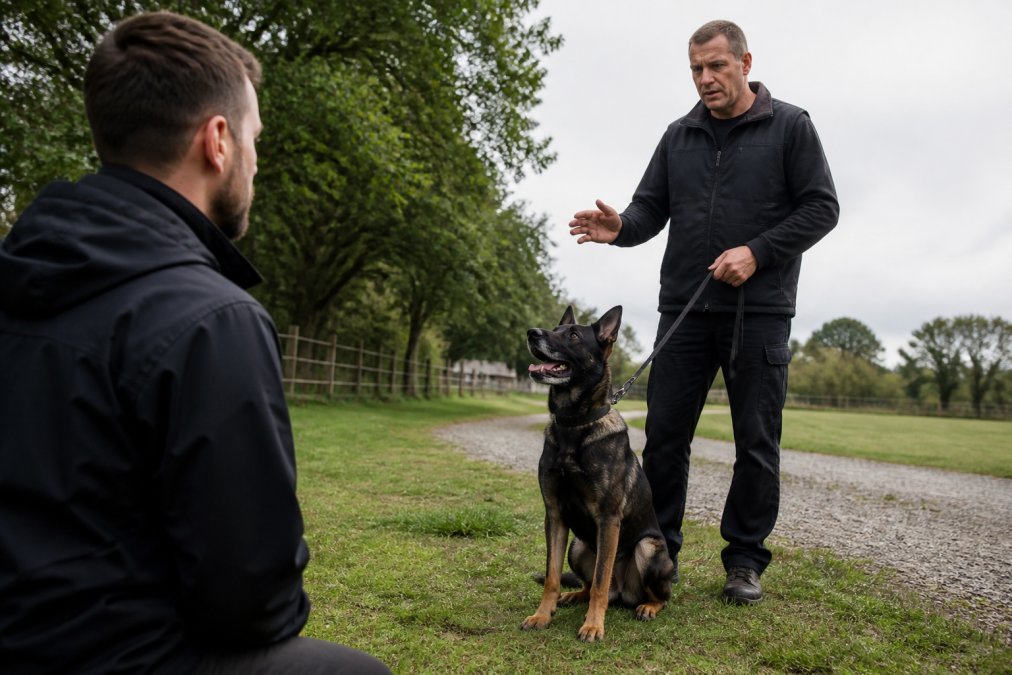
A dog trainer teaches skills: sit, stay, heel, recall. The focus is building new behaviours through repetition and reward. A canine behaviourist diagnoses and treats underlying psychological issues: separation anxiety, fear-based aggression, compulsive behaviours, and severe reactivity rooted in trauma or poor early socialisation.
For most owners dealing with pulling, inconsistent recall, or reactive barking, a professional trainer is the right starting point. A veterinary behaviourist is a vet with specialist qualifications in animal behaviour, typically involved when medication may be required alongside behaviour modification.
If your dog is dangerous to handle, has bitten, or shows extreme fear responses that don't reduce with normal training exposure, seek a referral to a veterinary behaviourist through your vet. If your dog is difficult but manageable, a skilled professional trainer with behavioural experience is where you start.
How to Train a Reactive Dog: What the Process Looks Like
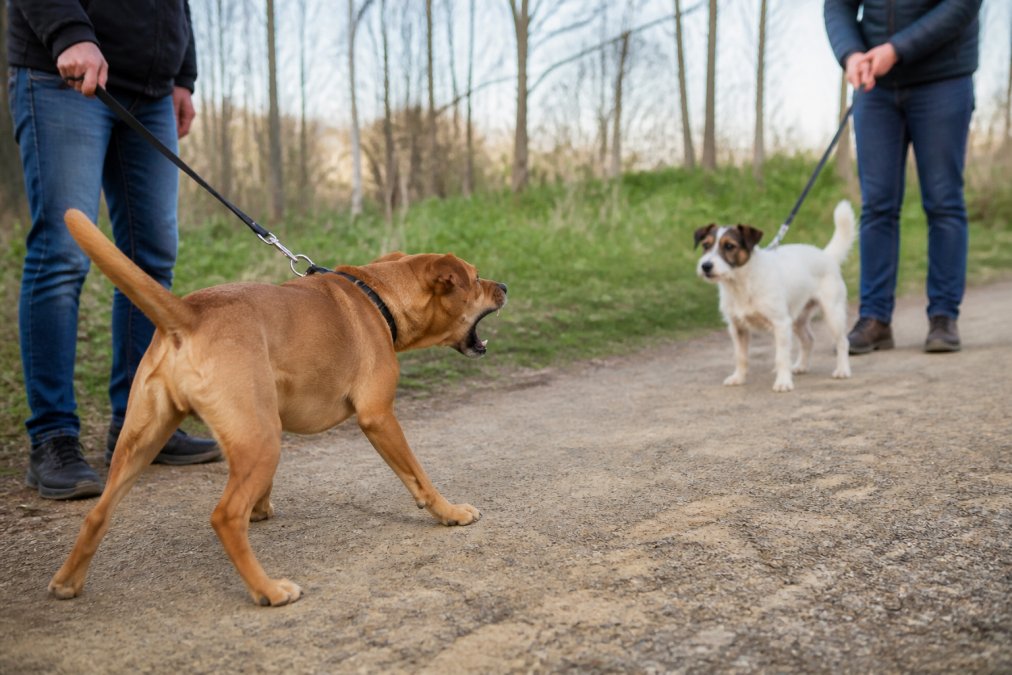
Training a reactive dog is not a quick fix. Reactivity, where a dog lunges, barks, or fixates on triggers like other dogs, cyclists, or strangers, is a learned response reinforced hundreds of times before help is sought. Unlearning it takes a structured, progressive approach.
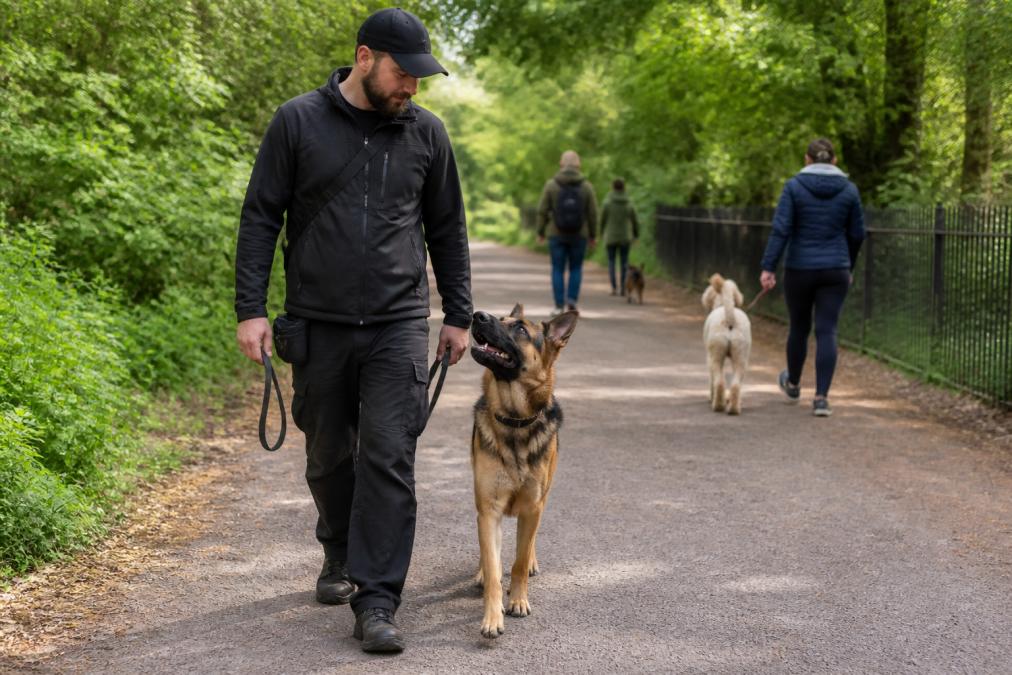
The process begins with a training assessment to establish the dog's threshold distance: how close a trigger can be before the dog reacts. Work starts below that threshold, rewarding calm, focused behaviour before gradually reducing the distance. This systematic desensitisation requires patience and consistency from the owner as much as the dog.
Leash Reactivity and Recall Training in Real-World Environments
Leash reactivity is the most common issue Severnside K9 is contacted about. The dog is fine off-lead in a field but becomes reactive on-lead in public spaces. The lead creates physical constraint that amplifies frustration and arousal, and owner tension travels down the lead to the dog.
Recall training in real-world environments follows the same principle: build reliability in low-distraction settings first, then systematically increase difficulty. A reliable recall is a dog that returns when a squirrel is running, another dog is approaching, or children are playing nearby.
According to The Kennel Club's guidance on recall training, recall is one of the most important safety behaviours a dog can learn and requires consistent reinforcement across varied environments.
Why Group Classes Often Fail Reactive and High-Drive Breeds
Group classes are built for the average dog. They work well for sociable, biddable breeds without significant reactivity. For a German Shepherd, Malinois, or dog with established reactivity, group classes are often counterproductive.
Reactive dogs are already over-threshold in group settings, meaning they're in a survival state, not a learning state. Asking a dog to learn "sit" while fixated on another dog three feet away is ineffective. One-to-one coaching in real-world environments is appropriate for these dogs. The trainer controls variables, the owner gets direct coaching on handling technique, and the dog is never pushed beyond what it can process.
How to Choose a Professional Dog Trainer: A Verification Guide
Choosing a professional dog trainer is challenging because the UK industry is currently unregulated. Anyone can call themselves a dog trainer regardless of qualification or experience. Due diligence is essential.
Checking Certifications: What Qualifications Actually Matter
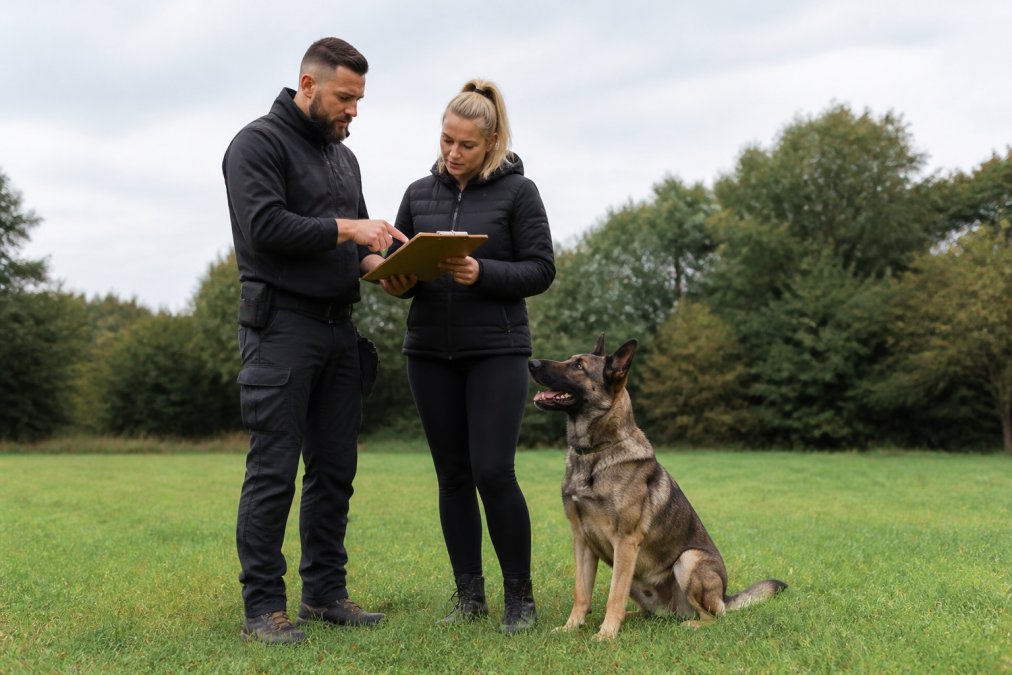
Professional certification is the first filter. Look for membership of recognised bodies such as the International Association of Canine Professionals or the Animal Behaviour and Training Council. These organisations require members to demonstrate knowledge, adhere to a code of conduct, and commit to ongoing professional development.
Ask directly: what qualifications do you hold, and are you a member of a professional body? A trainer who can't answer clearly is a red flag. Practical experience matters, but it must sit alongside formal training, not replace it.
Severnside K9 is a member of the International Association of Canine Professionals and is led by an ex-British Army K9 handler, bringing operational experience with high-drive working breeds that most civilian trainers haven't encountered.
Training Readiness Checklist Before Your First Session
Before committing to a trainer, work through this checklist:
- Has the trainer conducted a behavioural consultation or assessment before quoting a programme?
- Can the trainer clearly explain their methodology and why it suits your dog's specific needs?
- Do they train in real-world environments, not just private fields or indoor facilities?
- Are they a member of a recognised professional body with verifiable credentials?
- Do they provide owner coaching, not just dog training?
- Can they provide references or documented case outcomes from dogs with similar issues?
- Do they offer any form of guarantee or follow-up support?
- Is their approach tailored to your dog's individual temperament and drive level?
If a trainer can't satisfy at least six of these eight points, keep looking.
1-2-1 Dog Training Costs: What You're Paying For
One-to-one training costs more than group classes. In a group class, the trainer's attention is divided across six to eight dogs and owners simultaneously. You get perhaps ten minutes of direct coaching per hour. The curriculum is fixed, the pace set by the slowest dog, and there's no provision for your dog's specific triggers.
In a 1-2-1 session, the entire hour focuses on your dog, your handling technique, and specific behavioural challenges. The trainer adjusts in real time. If something isn't working, they change approach immediately. Progress is faster because the feedback loop is tighter.
For current pricing and programme options, visit the Severnside K9 website directly. Costs vary depending on the nature of behavioural issues, the number of sessions required, and whether training is conducted in your home or in public spaces.
Remote vs In-Person Training: Which Delivers Better Results
Remote training via video call has value for owner education, handling technique review, and protocol design. An experienced trainer can observe footage of your dog's behaviour and provide detailed guidance without being physically present.
For reactive dogs, remote training has clear limitations. The trainer cannot read body language in real time, cannot intervene when the dog goes over threshold, and cannot coach the owner's physical responses in the moment. The feedback loop is too slow for precision behaviour modification work.
In-person training in real-world settings consistently delivers better results for reactivity, leash pulling, and recall in high-distraction environments. Remote sessions work well as a supplement to in-person work, particularly for ongoing support between sessions.
| Format | Best For | Limitations |
|---|---|---|
| In-person 1-2-1 | Reactive dogs, high-drive breeds, recall work | Higher cost per session |
| Group classes | Sociable, low-drive dogs; basic obedience | Too distracting for reactive dogs |
| Remote / video sessions | Owner education, protocol review, follow-up support | Not suitable as standalone for reactive cases |
| Training workshops | Skill-building for owners with manageable dogs | Limited individual attention |
Training Workshops, Group Classes, and One-to-One Coaching Compared
Not every dog needs intensive one-to-one work. Understanding which format suits your dog's situation saves time and money.
Group classes suit puppies in their socialisation window, adult dogs with no significant behavioural issues, and owners wanting basic obedience in a social setting. The puppy socialisation element is genuinely valuable: positive, structured exposure to other dogs and people during the critical developmental window shapes a dog's responses for life.
Training workshops focus on specific skill sets, such as loose lead walking or recall, combining group instruction with individual practice. They're useful for owners who've completed basic training and want to develop specific skills further.
One-to-one coaching is the format of choice when the dog has a specific behavioural problem, when previous training hasn't transferred to real-world situations, or when the breed's drive level makes group settings unworkable. The personalised training plan, direct owner coaching, and ability to work in environments where problems actually occur make it most effective for dogs that need it most.
If your dog is difficult in public, pulls constantly, lunges at other dogs, or has unreliable recall in distracting environments, group classes are not the solution.
Finding professional dog training near me that actually works for a reactive or high-drive dog means looking beyond the nearest group class and asking harder questions about methodology, environment, and the trainer's real-world experience. Severnside K9 provides 1-2-1 dog training built around balanced, science-based methods, delivered in the environments where your dog actually struggles. Led by an ex-British Army K9 handler and backed by membership of the International Association of Canine Professionals, the service is designed for dogs that other trainers have found too difficult. Apply now and get your dog working reliably in the real world.
Frequently Asked Questions
What qualifications should a professional dog trainer have in the UK?
There is no single statutory licence required to call yourself a dog trainer in the UK. Look for membership of recognised bodies such as the International Association of Canine Professionals (IACP) or the Association of Pet Dog Trainers (APDT). These organisations require members to demonstrate competence and adhere to a code of conduct. Ask any trainer about their practical background, ongoing education, and whether they carry public liability insurance before booking a session.
What is the difference between a dog trainer and a canine behaviourist?
A dog trainer teaches specific skills: loose lead walking, recall, sit, stay, and impulse control. A canine behaviourist assesses and addresses the underlying emotional or psychological causes of problem behaviour, such as separation anxiety, fear responses, or aggression. For most reactive dogs, a highly experienced trainer with a strong understanding of canine psychology is sufficient. A veterinary behaviourist is typically reserved for cases with a clinical or medical dimension.
Is it better to choose group classes or 1-2-1 dog training?
Group classes suit dogs with basic socialisation needs and owners working on foundation obedience in low-distraction settings. One-to-one training is more effective for reactive dogs, high-drive breeds, or dogs with established behavioural issues, because the trainer can tailor every session to your specific dog and environment. For dogs that lunge, bark, or pull severely on the lead, placing them in a group class often reinforces the problem rather than solving it.
How much does professional 1-2-1 dog training cost?
Pricing for one-to-one professional dog training varies depending on the trainer's experience, the number of sessions, and whether sessions are conducted in your home or in the field. Trainers with specialist backgrounds, such as military K9 handling or advanced behaviour modification, typically charge more than general obedience instructors. Rather than comparing headline prices, assess what each programme delivers: a personalised training plan, real-world session locations, and ongoing owner support are worth more than a lower cost with no follow-through.
This article was written using GrandRanker